
Insight
How Physical-to-Digital Authentication is Reshaping Global Supply Chain Security
Tags
Let me share something that keeps supply chain executives awake at night: somewhere in the world right now, a counterfeit electronic component is being installed in a system that could fail catastrophically. Maybe it’s in an aircraft. Maybe it’s in a medical device. Maybe it’s in the car your family drives.
Last month I posted a research article detailing research we carried out into the global counterfeiting market. The numbers are staggering. While the OECD currently pegs annual counterfeiting at $500 billion, we’re on track to hit $1.8 trillion by 2030. That’s not just lost revenue—it’s lost lives. Last year, a young mother died when a counterfeit airbag exploded like a grenade in her car. A Portuguese airline discovered fake vibration dampers in their jet engines. The Pentagon found counterfeit chips in missile defence systems.
This isn’t just a business problem anymore. It’s a crisis of trust in our global supply chains.
The Authentication Revolution Nobody Saw Coming
Here’s what’s fascinating: whilst everyone was debating blockchain versus traditional security methods, something remarkable happened. Physical-to-digital authentication emerged as the missing piece of the puzzle. I’ve spent the last few years working with the electronics manufacturing industry to develop standards that actually work in the real world.
Traditional authentication methods—holograms, serial numbers, even basic QR codes—are like putting a better lock on your door whilst leaving the windows open. Counterfeiters have become sophisticated enough to replicate virtually any visual security feature.
Blockchain promised to revolutionise supply chain security, and it has valuable applications. But here’s the reality check: blockchain alone can’t tell you if the physical product is genuine. It’s brilliant at tracking digital records, but those records are only as good as the physical verification that creates them. You need that crucial physical-to-digital bridge.
Why Physical Fingerprinting Changes Everything
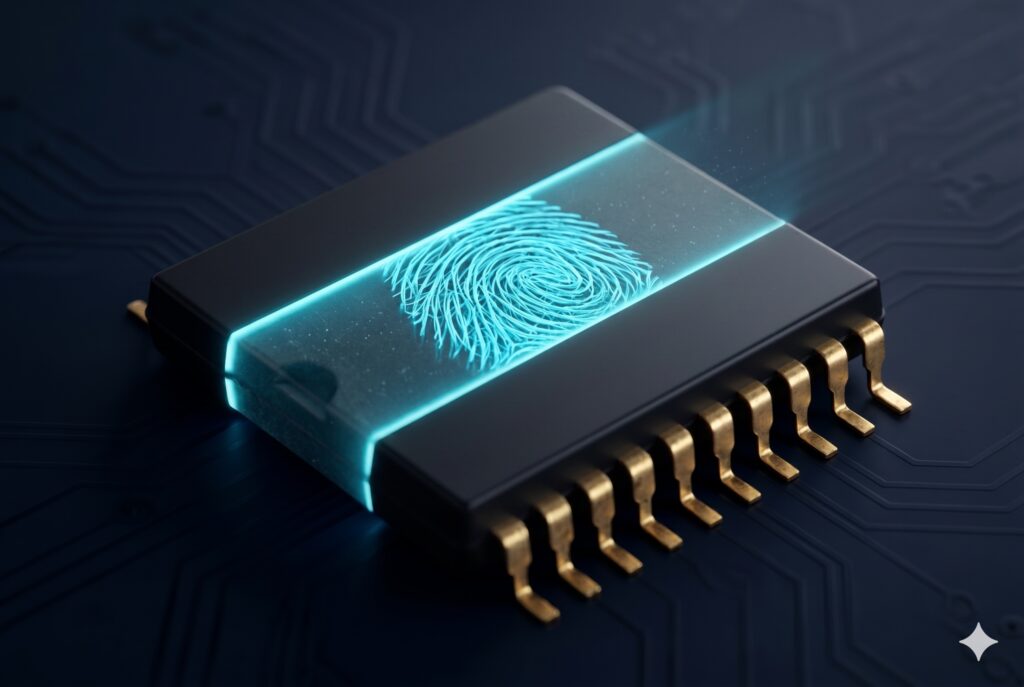
This is where it gets interesting. Physical Unclonable Functions (PUF) and similar technologies exploit something counterfeiters can’t replicate: the natural, random variations that occur during manufacturing. Think of it like human fingerprints—no two are exactly alike, even from the same production line.
Our Fibrecode® technology takes this concept further. We embed random fibres during manufacturing that create a unique, three-dimensional fingerprint readable by machine vision. It’s not just difficult to counterfeit—it’s physically impossible to replicate the exact random distribution, even if you have the original equipment.
The beauty is in the simplicity. Unlike silicon PUFs that require chip modification, physical fingerprinting can be applied to almost any product or component. We’re seeing adoption across industries—from aerospace companies protecting critical flight components to pharmaceutical firms securing drug packaging.
The Real Cost of Getting It Wrong
Let me put this in perspective. When the Missile Defence Agency found counterfeit parts in their THAAD missile systems, they spent $2.7 million just to fix that one incident. A major communications company’s counterfeit battery recall? $5 billion in costs and lost sales.
But here’s what the CFOs care about: companies implementing comprehensive physical-to-digital authentication are seeing 92% reductions in counterfeit incidents. The typical ROI? Between 6 and 24 months, depending on the industry. In pharmaceuticals, where we’re seeing 85% counterfeit reduction rates, the payback often comes even faster when you factor in liability protection.
The Regulatory Tsunami Has Already Hit
If the business case isn’t compelling enough, the regulatory landscape has shifted dramatically. The EU’s Digital Product Passport requirements kick in April 2025—that’s just months away. The US Drug Supply Chain Security Act is already in full force. China’s accelerating its traceability requirements.
For electronics manufacturers, the standards I’ve been helping develop with industry bodies aren’t optional anymore. They’re becoming the baseline for market access. If you can’t prove your components are genuine with physical-to-digital authentication, you’ll be locked out of major markets.
Building Your Authentication Strategy
So where do you start? First, recognise that one size doesn’t fit all. High-value, safety-critical components need the strongest protection—that’s where PUF technology or advanced physical fingerprinting makes sense. For broader product lines, you might combine QR codes with tamper-evident features and blockchain tracking.
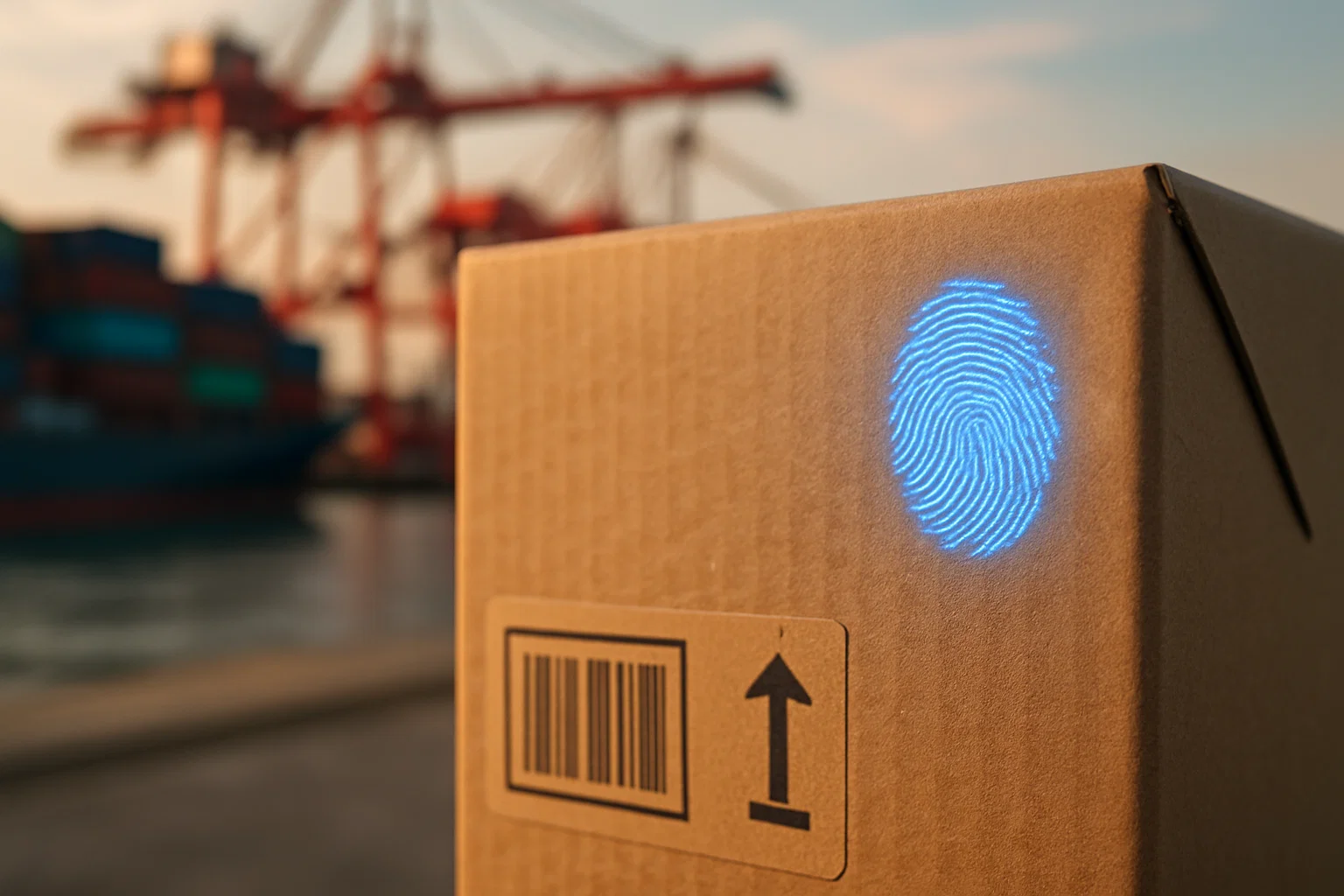
The key is creating that unbreakable link between the physical product and its digital identity. That’s what stops counterfeiters cold. They might copy your packaging, fake your holograms, even hack your databases—but they can’t replicate the unique physical signature of your genuine products.
Implementation costs typically range from £800,000 to £3.2 million for a comprehensive system, but remember those ROI figures. We’re seeing manufacturers recover 25% of previously lost revenue, cut warranty costs in half, and reduce supply chain costs by 20-30% through improved visibility.
The Future Is Already Here
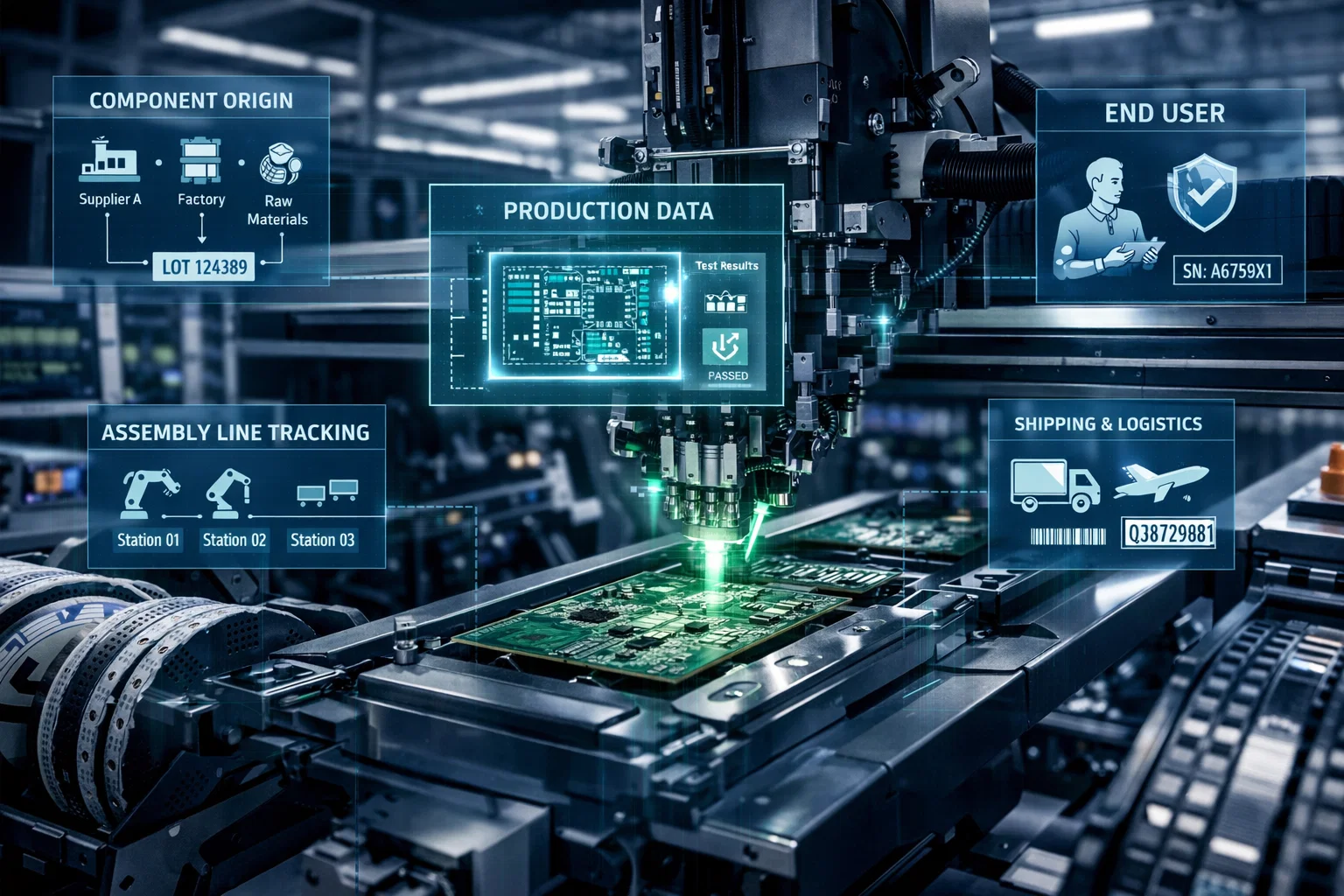
The convergence of IoT sensors, AI-powered verification, and physical fingerprinting is creating authentication systems that are virtually foolproof. We’re moving toward self-verifying supply chains where every component can prove its own authenticity in real-time.
The question isn’t whether you need physical-to-digital authentication. It’s whether you’ll implement it on your terms or have it forced upon you by regulations, liability concerns, or—worst of all—a catastrophic counterfeit failure.
The $1.8 trillion counterfeiting economy is coming. The tools to fight it are here. The companies that act now won’t just protect themselves—they’ll turn authentication into a competitive advantage that builds trust, ensures safety, and drives growth.
The choice is yours. But if I were you, I wouldn’t wait for the next counterfeit disaster to make headlines. Because by then, it might be your company’s name in the news.